FSSAI Registration is mandatory for food businesses in India to ensure legal compliance and food safety standards.
FSSAI Registration is a mandatory legal approval required for all food businesses in India. It is issued by the Food Safety and Standards Authority of India (FSSAI) under the Food Safety and Standards Act to ensure that food products are safe, hygienic, and fit for consumption.
An Food Safety and Standards Authority of India (FSSAI) License is a mandatory certification required for any food business operating in India. It is issued by the Food Safety and Standards Authority of India to ensure that food products are safe, hygienic, and meet the required quality standards.
Any business involved in the manufacturing, processing, packaging, storage, distribution, or sale of food must obtain an FSSAI license. This license helps businesses operate legally while building customer trust and credibility in the market. It also ensures compliance with food safety regulations and protects consumers from unsafe or low-quality food products.
How many types of licence in FSSAI REGISTRATION?
In India, the Food Safety and Standards Authority of India (FSSAI) provides 3 types of licences/registrations based on the size and turnover of the food business:
✅ Basic FSSAI Registration
For small businesses and startups with an annual turnover up to ₹12 lakh.
✅ State FSSAI Registration
For medium-sized businesses with turnover between ₹12 lakh and ₹20 crore. Issued by the State Government.
✅ Central FSSAI Registration
For large businesses with turnover above ₹20 crore, import/export businesses, or companies operating in multiple states. Issued by the Central Government.
Choosing the right licence ensures legal compliance and smooth business operations.
What could happen if it doesn’t have FSSAI REGISTRATION?
If your food business does not have FSSAI registration, serious consequences can follow:
✅Heavy Penalties & Fines – You may face fines up to ₹5 lakh under the Food Safety and Standards Act.
✅Business Shutdown – Authorities can seal or shut down your food business immediately.
✅ Legal Action – You may face court cases and legal notices from the Food Safety and Standards Authority of India.
✅Loss of Customer Trust – No license means customers may see your brand as unsafe or illegal.
One inspection… and your entire business could be at risk.
Don’t wait for a notice — stay compliant.
FSSAI License Requirements for Online Food Delivery Platforms
Online food delivery platforms must comply with the regulations issued by the Food Safety and Standards Authority of India (FSSAI) to operate legally in India. These platforms are treated as Food Business Operators (FBOs) under the Food Safety and Standards Act, 2006.
✅ 1. Mandatory FSSAI Registration
Online food delivery platforms must obtain a valid FSSAI Central License before operating. Without this license, running a food delivery platform or listing food products online is illegal.
✅ 2. Verification of Restaurant / Seller Licenses
Platforms must ensure that all restaurants or food sellers listed on their app or website have a valid FSSAI license or registration. Restaurants without a license cannot be listed.
✅ 3. Display of FSSAI License Number
The platform must clearly display the FSSAI license or registration number on invoices, receipts, and transaction documents provided to customers.
✅ 4. Warehouse and Storage Compliance
If the platform manages warehouses or dark stores, all storage facilities must be registered with FSSAI and maintain proper hygiene and safety standards.
✅ 5. Food Safety and Hygiene Standards
Platforms must follow strict food safety guidelines, including proper handling, packaging, and transportation of food items to maintain quality and safety.
✅ 6. Training for Food Handlers
Delivery personnel and food handlers must receive food safety training, such as FOSTaC (Food Safety Training & Certification), to ensure hygienic practices.
✅ 7. Transparency and Consumer Information
Online platforms must provide accurate product information, including expiry date, ingredients, and shelf life, to ensure consumer safety and transparency.
Who Needs FSSAI Registration in India?
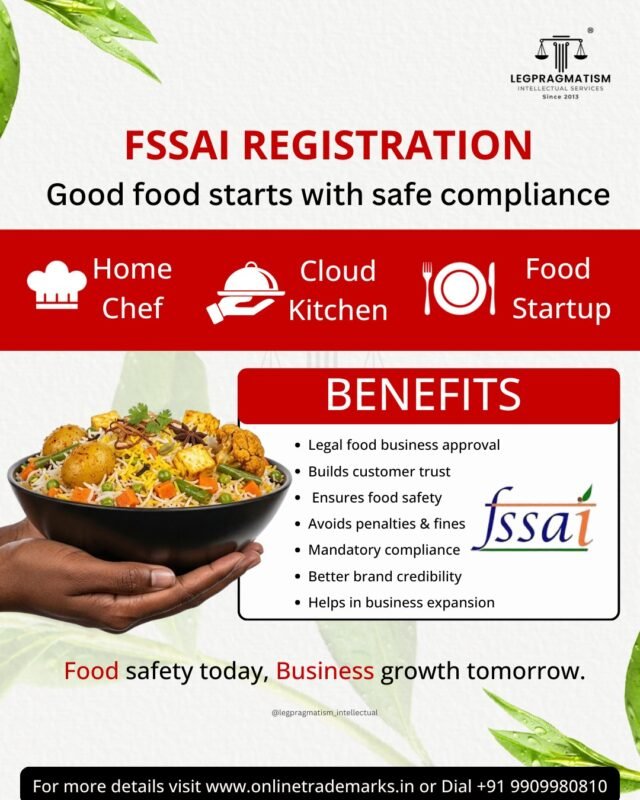
Any individual or business involved in the manufacturing, processing, packaging, storage, distribution, or sale of food products must obtain FSSAI Registration or License from the Food Safety and Standards Authority of India. This registration ensures that the food business follows proper safety and hygiene standards.
Businesses That Need FSSAI Registration
- Restaurants and Cafés
Any restaurant, café, or food outlet serving food to customers must have FSSAI registration. - Food Manufacturers and Processors
Businesses involved in producing or processing food items. - Home-Based Food Businesses
Individuals selling homemade food, tiffin services, or baked goods. - Online Food Sellers
Businesses selling food through websites or online marketplaces. - Food Delivery Platforms
Online platforms that list restaurants and deliver food to customers. - Food Traders and Retailers
Grocery stores, supermarkets, and food retailers. - Food Wholesalers and Distributors
Businesses that supply food products in bulk to retailers or other businesses. - Food Storage Units and Transporters
Cold storage facilities, warehouses, and food transport services.
💡 Need help?
At OnlineTrademarks.in, we make the process simple, secure, and seamless.
📞 Contact us today: +91 9909980810
🌐 Visit: www.onlinetrademarks.in
Follow us on social : Facebook